Disclosure: This page may contain affiliate links to books or resources on free speech and censorship. If you purchase through these links, we may earn a commission at no extra cost to you.
Accountability: A Beginner’s Guide to Free Speech and Censorship
In January 2021, after the Capitol riots, platforms like Twitter and Facebook banned former President Donald Trump. This incident stirred a national debate on free speech, censorship, and accountability. Many viewed these actions as necessary to curb hate speech and misinformation. Others saw them as an alarming infringement on lawful discourse. Understanding the nuances of this debate is crucial for anyone concerned about free speech online.
Stakeholders and Who is Affected
The conversation around censorship impacts various stakeholders, including:
- Social Media Companies: Platforms like Twitter, Facebook, and Parler must navigate complex policies on content moderation.
- Users: Individuals, especially conservatives and dissenters, often feel targeted by moderation practices.
- Governments: Regulatory bodies are increasingly involved in discussions about free speech and platform accountability.
- Advertisers: Brands may choose or avoid platforms based on their content policies and public perception.
These stakeholders are interconnected. When one group feels marginalized, it can lead to broader societal implications.
Incentives and Potential Deception
Censorship often arises from a mix of intentions:
- Safety: Many platforms argue that moderation is necessary to protect users from harmful content.
- Reputation: Companies may censor content to maintain a favorable public image.
- Regulatory Compliance: Governments may pressure companies to enforce stricter content rules.
However, these motives can lead to potential deception. For example, claims of protecting users may mask the silencing of dissenting voices, especially those critical of mainstream narratives.
Why It Is Controversial and Avoided
Censorship is controversial for several reasons:
- Free Speech: Many view it as a violation of the First Amendment rights.
- Subjectivity: Deciding what constitutes harmful speech is inherently subjective.
- Chilling Effect: Fear of censorship can deter individuals from expressing their views.
Critics argue that even lawful speech can be unfairly targeted, leading to a climate of fear around free expression.
History and Past Consequences
Historically, censorship has had far-reaching consequences. For instance:
- Parler’s Ban: After the Capitol riots, Amazon Web Services (AWS) removed Parler from its hosting services. Many argued this was an unfair act against a platform that catered to conservative voices. Parler has since struggled to regain a foothold in the market.
- Shadow Banning: This practice involves limiting the visibility of certain users or content without their knowledge. Critics claim it disproportionately targets conservative voices, as seen in allegations against Twitter in 2020.
These incidents illustrate how quickly voices can be silenced, raising questions about accountability in digital spaces.
Forecasts and Scenarios
Looking ahead, the landscape of free speech and accountability may evolve in several ways:
- Increased Regulation: Governments may impose stricter rules on content moderation, potentially leading to more significant backlash from users.
- Emergence of New Platforms: Users disillusioned with mainstream platforms may flock to alternatives, seeking spaces for free expression.
- Technological Solutions: Innovations in AI may help platforms better distinguish harmful content from lawful speech, though this could introduce new biases.
Each scenario carries potential benefits and drawbacks that must be carefully considered.
Benefits vs Harms
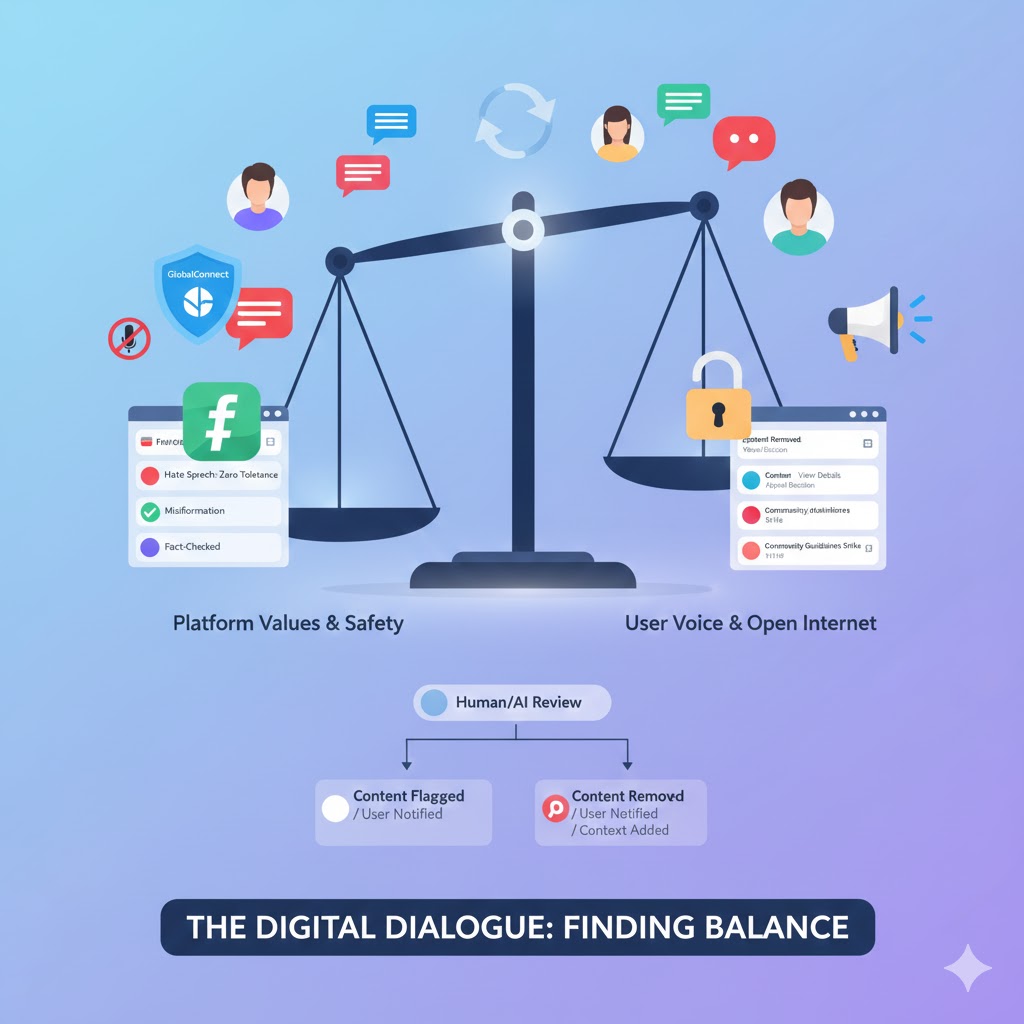
The debate over censorship and accountability often centers on the balance between benefits and harms:
Benefits of Moderation
- Protection from Harmful Content: Reduces the spread of misinformation and hate speech.
- Enhanced User Experience: Creates a safer environment for users.
Harms of Censorship
- Suppression of Dissent: Marginalizes voices that challenge the status quo.
- Erosion of Trust: Users may feel betrayed by platforms that do not uphold free speech principles.
Evidence Transparency Mini-Audit
To better understand the conversation around accountability, we must audit the evidence:
What Data Exists
- Reports on Censorship: Studies show patterns of bias in content moderation.
- User Surveys: Many users report feeling censored or silenced.
What’s Missing
- Independent Research: More rigorous studies are needed to examine the impact of censorship on public discourse.
- Longitudinal Data: Tracking changes over time would provide insights into evolving practices.
Spotting Honest vs. Misleading Statistics
- Source Credibility: Trust data from reputable organizations or peer-reviewed studies.
- Context Matters: Understand the circumstances surrounding statistics to avoid misinterpretation.
Caveats
- Subjectivity: Different perspectives can lead to varying interpretations of data.
- Bias: Both platforms and researchers may have inherent biases influencing their findings.
A Fair Presentation of Opposing Views
Proponents of stronger moderation often argue that it is necessary for maintaining a safe online environment. They assert that unchecked speech can lead to real-world harm, including violence and misinformation. Critics of this view argue that this rationale can lead to overreach, where lawful discourse is stifled under the guise of safety.
What You Can Do Now
- Educate Yourself: Stay informed about current events related to free speech and censorship.
- Support Alternative Platforms: Explore and use social media platforms that prioritize free speech.
- Engage in Dialogue: Discuss concerns about censorship with friends and family to raise awareness.
- Advocate for Policy Changes: Contact local representatives to express your views on free speech and content moderation policies.
- Promote Transparency: Encourage platforms to be transparent about their moderation policies and practices.
In conclusion, accountability in free speech and censorship is a complex issue that requires careful consideration. By engaging in informed discussions and advocating for principled free speech, we can work toward a more open and fair digital landscape.
—
Leave a Reply
You must be logged in to post a comment.