Disclosure: This page may contain affiliate links to books or resources on free speech and censorship. If you purchase through these links, we may earn a commission at no extra cost to you.
Accountability in Social Media: A Checklist for Free Speech
In recent years, incidents such as the removal of Parler from Amazon Web Services (AWS) and the ban of former President Donald Trump from platforms like Twitter and Facebook have ignited heated debates about free speech online. These actions have raised critical questions about accountability in social media. Who decides what is acceptable speech? And how do these decisions impact conservative voices and dissenting opinions?
Stakeholders and Who is Affected
The stakeholders in this debate include:
- Social Media Companies: Platforms like Twitter, Facebook, and YouTube, which enforce community guidelines.
- Users: Individuals and organizations, especially those with conservative viewpoints, who may face censorship.
- Governments: Regulatory bodies looking to enforce policies on online speech and platform accountability.
- Advertisers: Businesses that rely on social media for marketing and may influence platform policies.
The consequences of censorship can be severe. Users can lose their platforms, and trusted voices may be silenced. This is particularly concerning for conservative users who often report feeling targeted by platform moderation policies.
Incentives and Potential Deception
There are various incentives at play in the regulation of online speech:
- Revenue Generation: Social media companies often prioritize advertiser preferences, leading to biased moderation.
- Political Pressure: Governments may push platforms to enforce stricter policies on certain views, sometimes based on public sentiment rather than free speech principles.
- User Engagement: Algorithms are designed to prioritize content that engages users, which can lead to the suppression of less sensational viewpoints.
Critics argue that these incentives can lead to unintentional bias or deliberate censorship of dissenting voices. For instance, the removal of content that does not align with trending narratives can create an echo chamber, limiting diverse perspectives.
Why It Is Controversial and Avoided
Discussions surrounding accountability in social media are contentious for several reasons:
- Fear of Backlash: Companies may avoid transparency in their policies to sidestep criticism from users or advocacy groups.
- Legal Ramifications: The legal landscape surrounding Section 230 of the Communications Decency Act complicates how platforms engage with user content.
- Diverse User Base: Balancing the interests of a diverse user base makes it challenging to create policies that satisfy everyone.
These factors contribute to a reluctance to address the issue comprehensively, leaving many questions unanswered.
History and Past Consequences
Historically, the consequences of inadequate accountability in social media have been stark:
- Parler’s Removal (January 2021): Following the Capitol riots, Amazon Web Services terminated Parler’s hosting, effectively silencing a platform that catered to conservative voices. Critics argue this set a dangerous precedent for speech suppression.
- Trump’s Ban (January 2021): After the Capitol unrest, social media giants banned Trump, citing incitement to violence. This raised alarms about selective enforcement and the implications for political discourse.
Both cases illustrate the potential for significant consequences when platforms enforce vague or inconsistent policies.
Forecasts and Scenarios
Looking ahead, we can anticipate several scenarios regarding accountability in social media:
- Increased Regulation: Governments may implement stricter regulations on how platforms manage content, which could lead to more oversight but might also threaten free speech.
- Emergence of Alternative Platforms: As users seek refuge from perceived censorship, alternative platforms may gain popularity, but success will depend on their governance models.
- Ongoing Debate About Section 230: Calls for reform of Section 230 could lead to changes in how platforms manage user content, impacting both free speech and platform accountability.
These scenarios highlight the need for a balanced approach to governance that respects free speech while ensuring accountability.
Benefits vs Harms
The debate over accountability in social media presents a complex trade-off:
Benefits
- Improved User Safety: Enhanced moderation can protect users from harmful content.
- Community Standards: Clear guidelines can help foster a respectful online environment if done honestly.
Harms
- Suppression of Dissenting Voices: Overzealous moderation can silence important viewpoints, particularly conservative ones.
- Echo Chambers: Lack of diverse opinions can lead to polarized environments.
Evidence Transparency Mini-Audit
What Data Exists
- Numerous studies show that conservative voices report higher instances of censorship on major platforms. For example, a 2020 Pew Research survey found that 66% of conservatives believe social media platforms favor liberal views.
What’s Missing
- There is a lack of comprehensive data on the long-term impact of moderation policies on user engagement and opinion diversity.
Spotting Honest vs Misleading Statistics
- Look for transparency in data collection methods and sample sizes. Independent studies are often more reliable than those funded by interested parties.
Caveats
- Statistics can be misleading if taken out of context or if they do not account for variables such as user demographics.
The Opposing View
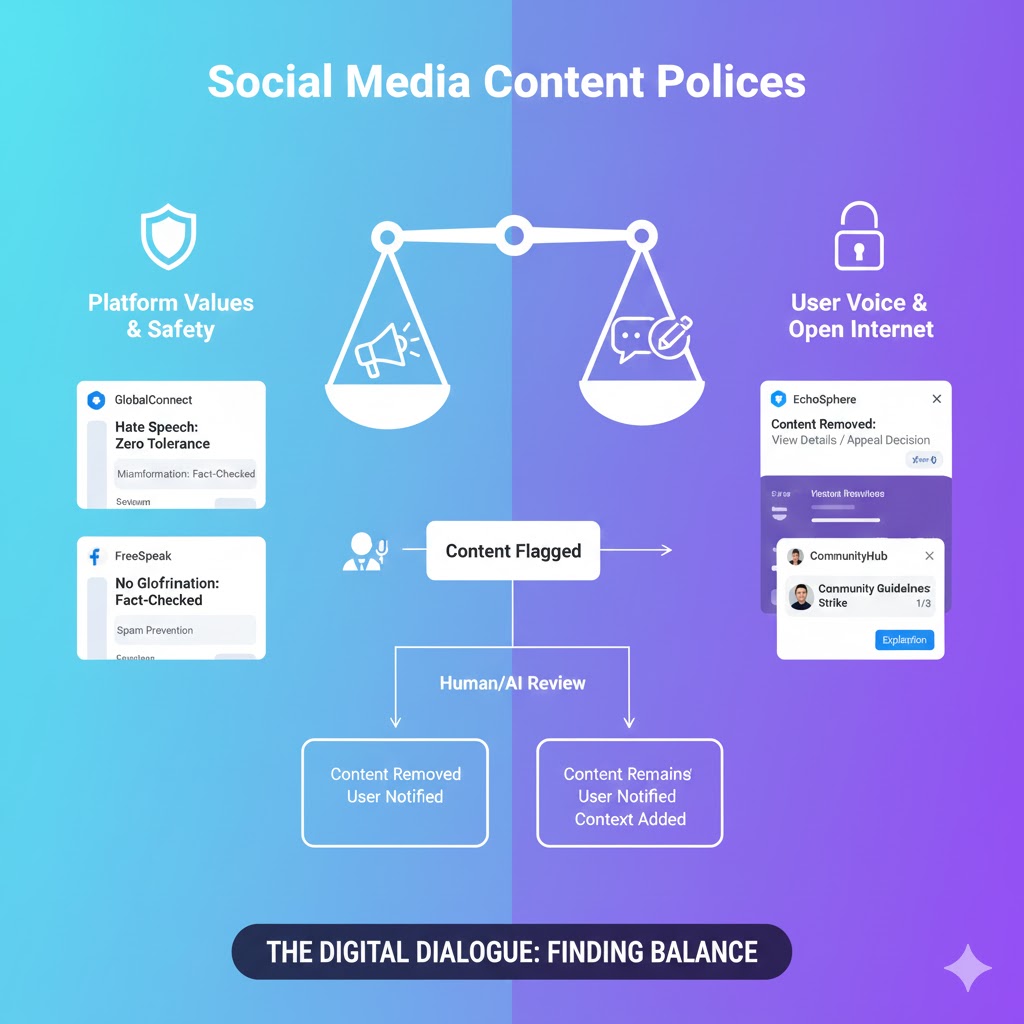
Proponents of stronger moderation argue that it is necessary to combat hate speech and misinformation. They contend that platforms should take a proactive stance in ensuring that harmful content does not proliferate online.
However, while the intent to protect users is commendable, this approach risks overreach and the suppression of lawful but controversial speech. The challenge lies in finding a balance between safety and free expression.
What You Can Do Now
To advocate for accountability in social media while protecting free speech, consider the following actions:
- Engage with Policymakers: Advocate for laws that protect free speech while holding platforms accountable.
- Support Alternative Platforms: Explore and use platforms that promote free speech values.
- Educate Yourself and Others: Stay informed about social media policies and their implications for free speech.
- Encourage Transparency: Urge social media companies to be transparent about their moderation policies and decisions.
In conclusion, accountability in social media is a pressing issue that impacts free speech, especially for conservative voices. By understanding the complexities involved, we can advocate for a balanced approach that upholds the principles of free expression while ensuring accountability.
Further reading
- Site purpose: Document, explain, and challenge social media censorship and deplatforming while making a principled, persuasive case for robust free speech online.
- Primary KPI: Engaged reading time, shares, and discussion from both supporters and skeptics of robust free speech.
- Suggested keyphrase: free speech social media
- Categories: Free Speech, Case Studies, Platform Power
- Tags: free speech social media, censorship and deplatforming, conservative voices silenced online, Parler AWS Apple Google free speech
- SEO title: Accountability: checklist
- Meta description: “`yaml title: “Accountability in Social Media: A Checklist for Free Speech” slug: accountability-social-media-checklist meta_title: “Accountability in Soc
- Angles: controversy/causes/impacts, stats audit
Leave a Reply
You must be logged in to post a comment.